

Guest Virtue Insights
The Job I Almost Walked Away From
When things fell apart More than ten years ago, I believed I already
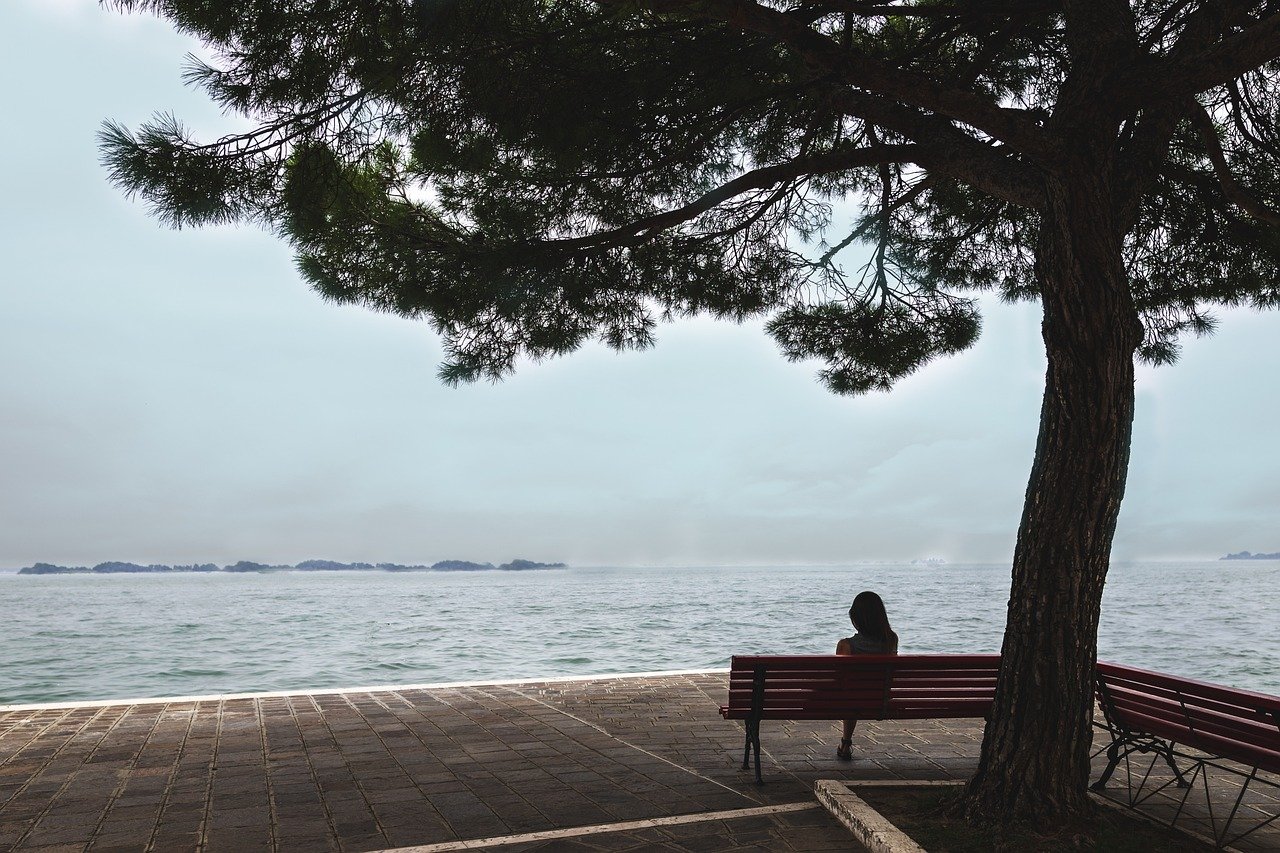
Finding Peace in the Space Between His Heart and His Permission
A child is born with cancer. A man serves fifteen years in prison for a crime he did not commit. A faithful spouse gets betrayed by the only partner they have ever known. A mother raises her son with everything she has, and he walks away without looking back. A young man follows every rule, earns every degree, and still cannot find work while his bills pile up like accusations. Life does not always reward good people with good outcomes.
And in those moments, somewhere in the silence, many of us wonder: Did God want this for me?
I have asked myself this question more times than I can count. It is one of the most honest questions a human heart can ask. We do not ask it out of rebellion. We ask it because we trusted, and life still broke something in us. We ask it because we need to know if the God we pray to is the same God who let this happen.
I have come to believe that not everything that happens is what God wants for us.
His will and His permission are not the same thing. God’s will is His heart, His desire, what He longs for His children. “For I know the plans I have for you,” He told Jeremiah, “plans for peace and not for harm, to give you a future and a hope.” This is what He wants.
But we live in a world where people have free will. Where systems fail. Where bodies break down. Where sin and selfishness send ripples outward that touch people who did nothing wrong. God gave humanity the gift of choice, and sometimes people use that gift to wound each other. Sometimes they use it to wound themselves. And God, who could override every wrong decision, does not. Because love that is forced is not love at all.
A child’s cancer is not God’s will. A stray bullet that kills an innocent bystander is not God’s will. A system that denies justice to the honest while rewarding the dishonest is not God’s will. These are the painful realities of a world that is not yet fully healed.
When Joseph’s brothers sold him into slavery, God did not will the betrayal. But years later, Joseph stood before those same brothers and said: “You intended it for harm, but God intended it for good.” The harm was human. The redemption was divine.
If God is good and powerful, why does He allow pain at all? This question has occupied theologians, philosophers, and grieving hearts for thousands of years. I don’t pretend to have all the answers to why God allows pain. I am not sure anyone does. But looking back at my own life, I notice that some things only grew in me during hard seasons. Patience did not come when everything arrived on time. Compassion did not deepen until I suffered. Faith meant nothing until it was tested.
James wrote that trials produce perseverance, and perseverance produces maturity, and maturity makes us “complete, not lacking anything.” I used to read that verse and nod. Now I read it and remember what it cost to understand.
What strikes me most, though, is not that God teaches us through difficulty. It is that He stays. “When you pass through the waters,” Isaiah wrote, “I will be with you.” Not if. When. He knew we would face floods. His answer was not to stop the rain but to stand beside us in it.
“The Lord is close to the brokenhearted and saves those who are crushed in spirit.” — Psalm 34:18
You might also like What if the Good Samaritan Had Just Said, “I Will Pray for You”?
Let me tell you where this understanding really became real for me. Last spring, I finished my PhD. After years of late nights, sacrifice, and prayers whispered over open textbooks, I finally crossed the finish line. I had followed God’s lead to this program, sought His guidance at every turn, and believed the next chapter would open smoothly. I applied for my work authorization. I sent out resumes. I waited.
And nothing happened.
Weeks turned into months. My savings disappeared. Bills arrived with red deadlines to pay or be suspended. I remember staring at my inbox one afternoon, reading another rejection letter, feeling a storm of disappointment. My classmates were posting pictures of new offices, new titles, new beginnings. I refreshed my email a hundred times a day and found nothing but silence.
I started questioning everything. Was the degree a mistake? Was I even qualified? Had I wasted years of my life? I removed my PhD from my resume one night, thinking maybe I was “too educated.” The next morning, I put it back, ashamed of my own desperation. I was not myself. I was a smaller, frightened version of myself, shrinking by the day.
One morning in late summer, I sat on the edge of my bed before the sun came up. The room was still dark. I could hear traffic outside, the world moving while I stayed frozen. And I broke down completely. I had run out of strength. I bent forward, pressed my palms against my eyes, and whispered the question I had been afraid to ask: “God, why? What do You want from me? I had prayed about every step of my journey and had sought Your guidance before every decision. Why am I now stuck in this mess? Why am I here?”
I do not know how long I stayed like that, then something happened that I cannot fully explain. In the middle of my tears, a deep peace washed over me. My eyes dried. My heart steadied. Nothing in my circumstances had changed, but something inside me shifted. I did not hear a voice. I did not see a vision. But I felt held. As if someone had placed a hand on my shoulder and said, without words, “I am here. I have not left.”
My circumstances did not change that morning. But I did.
It took seven months for my work permit to arrive. Seven months of waiting, trusting, doubting, and trusting again. But one week before that permit was issued, my phone rang. A job I had applied for back in February, a job I had forgotten entirely, wanted to interview me. Everything moved quickly after that, as if God had been holding back a gift until I was ready to receive it. Within days, I had an offer. It was not just any job. It was the right job. The one that fits my experience, my calling, my strange and winding path.
Was the delay God’s will? I do not think so. Someone was responsible for processing my paperwork. Systems are slow. Life is complicated. But something happened in me during those seven months that I am not sure could have happened any other way. God used that waiting season to build something in me. He taught me endurance. He deepened my faith. He showed me the fragile places in my identity that needed healing. He reminded me that my path would never look like anyone else’s path, and that was okay.
For a long time, I believed my suffering meant I had done something wrong. I searched my past for the sin that had caused this, as if God were keeping score. A friend finally asked me, gently: “Do you really think that’s how He works?” I did not have an answer. But the question stayed with me, and eventually I stopped carrying guilt on top of grief.
I also had to stop watching everyone else’s life. Scrolling through updates from classmates who had already started their careers was its own kind of torture. Their story was not my story. Their timeline was not my timeline. I knew this, but knowing and feeling are different things. It took months before I could be genuinely happy for them without the ache underneath.
Somewhere along the way, I learned the difference between giving up and giving over. Giving up says nothing matters. Giving over, says I cannot control this, but maybe I do not need to. The tighter I gripped my plans, the more anxious I became. When I finally opened my hands, something in me unclenched. It was not resignation. It was release.
And I started asking a different question. Not “Why is this happening?” but “What is this showing me?” The answer was uncomfortable. I had tied my identity to achievement. I measured my worth by what I produced. The wilderness did not create that problem. It just made it impossible to ignore.
There is a space between what God desires and what God allows. It is not a comfortable space. It holds confusion, grief, and questions that do not resolve completely. But it also holds grace. Grace to endure what we did not choose. Grace to become who we could not become on easier roads.
Job lost everything. His children, his wealth, his health, his reputation. His friends told him he must have sinned. His wife told him to curse God and die. But Job held on. And at the end, after all the arguments and all the silence, he said:
“My ears had heard of you, but now my eyes have seen you.” — Job 42:5
I think about that sometimes, how the worst season of his life became the place where he finally saw clearly.
“In this world, you will have trouble. But take heart! I have overcome the world.” — John 16:33
He did not promise a life without storms.
He promised Himself within the storm.

When things fell apart More than ten years ago, I believed I already
Finding Peace in the Space Between His Heart and His Permission A child

A reflection on the difference between saying we care and showing we care